
Everest Base Camp Trek: The Complete 2026 Guide
Everything you need to plan the classic trek to Everest Base Camp, route, costs, permits, training, packing and the mistakes we see every season.
Read article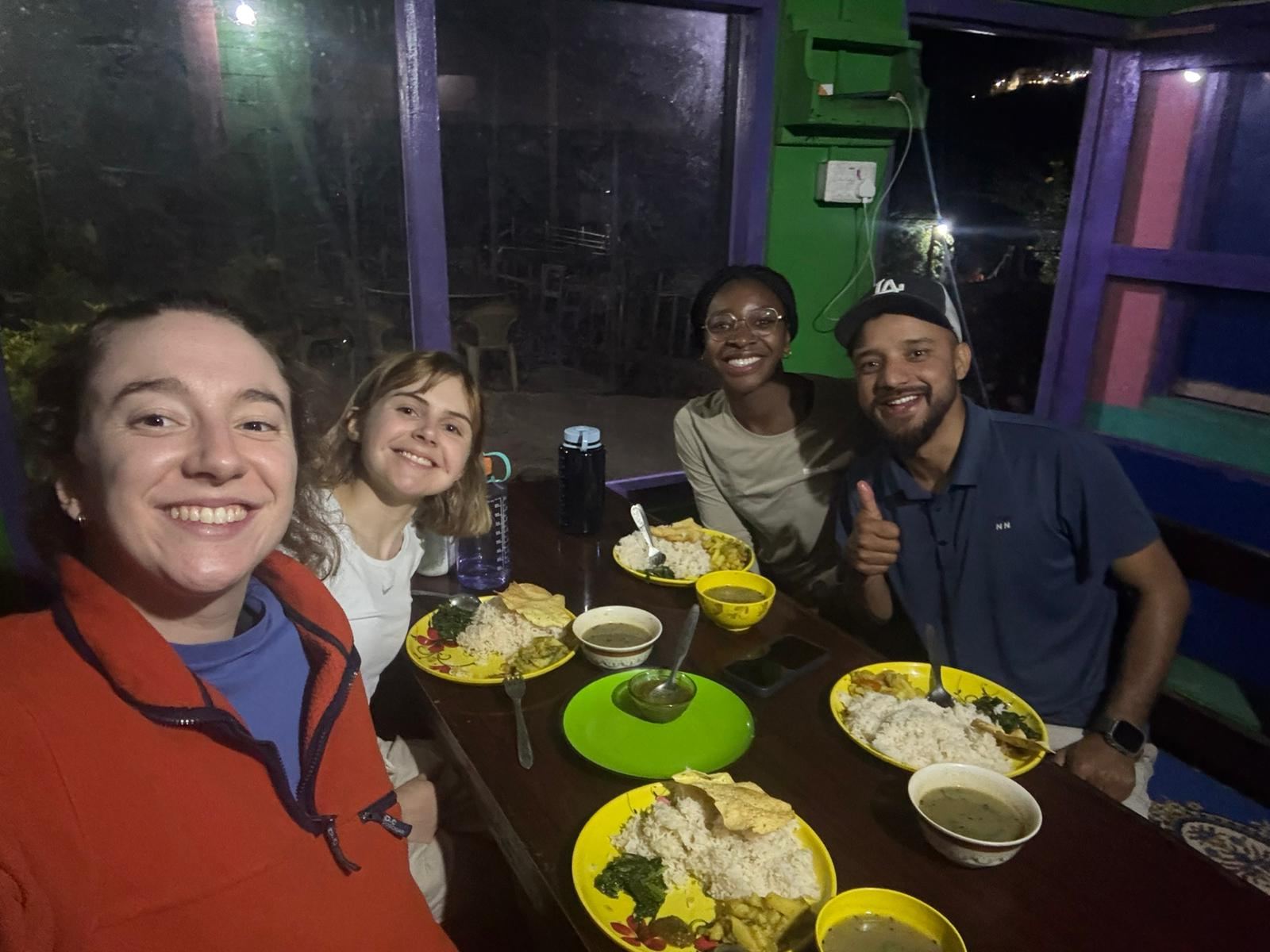
Somewhere around day two of every trek, a guest looks at our guide's plate. A steel platter loaded with rice, lentils and little dishes of everything, and asks what he is having. By day four, they are ordering the same thing. Welcome to dal bhat.
Dal bhat is less a dish than a system: bhat (steamed rice) at the centre, dal (lentil soup) poured over it, and orbiting side dishes, tarkari (seasonal vegetable curry), saag (sautéed greens), crunchy papad, and a spoonful of fiery achar pickle that does most of the talking. Up in the high valleys the vegetables change with the altitude: potatoes and buckwheat near Kyanjin, mustard greens in the middle hills, fresh everything in the lowlands.
Slow-burning rice carbohydrates, lentil protein, vegetables and fluids in one plate. It is accidental sports science, refined over centuries. It is also the freshest thing on any teahouse menu (cooked in bulk, eaten hot, nothing sitting around), the cheapest way to be truly full, and the source of the trail's favourite chant: "Dal bhat power, twenty-four hour!"
Here is the beautiful part: dal bhat traditionally comes with free refills. The didi (big sister) running the kitchen will circle the dining room with pots, topping up your rice and dal until you surrender. On a 6-hour walking day, this is not a gimmick; it is a lifeline. Accept the second serving. You will walk better tomorrow.
Order dal bhat for dinner the night before any big day, pass mornings, sunrise hikes, long descents. There is a reason every porter in Nepal eats it twice a day.
Hungry already? There is a plate waiting for you in a teahouse somewhere on one of these trails.
Everything you need to plan the classic trek to Everest Base Camp, route, costs, permits, training, packing and the mistakes we see every season.
Read article
The licensed-guide rule explained simply: where it applies, why it exists, what it costs, and what a good guide actually does all day.
Read article